Dr. Jeff Masters' WunderBlog

The tornado season of 2008: climate change to blame? And, tropical update
Posted by: Dr. Jeff Masters, 05:07 PM GMT on Mei 27, 2008 +6
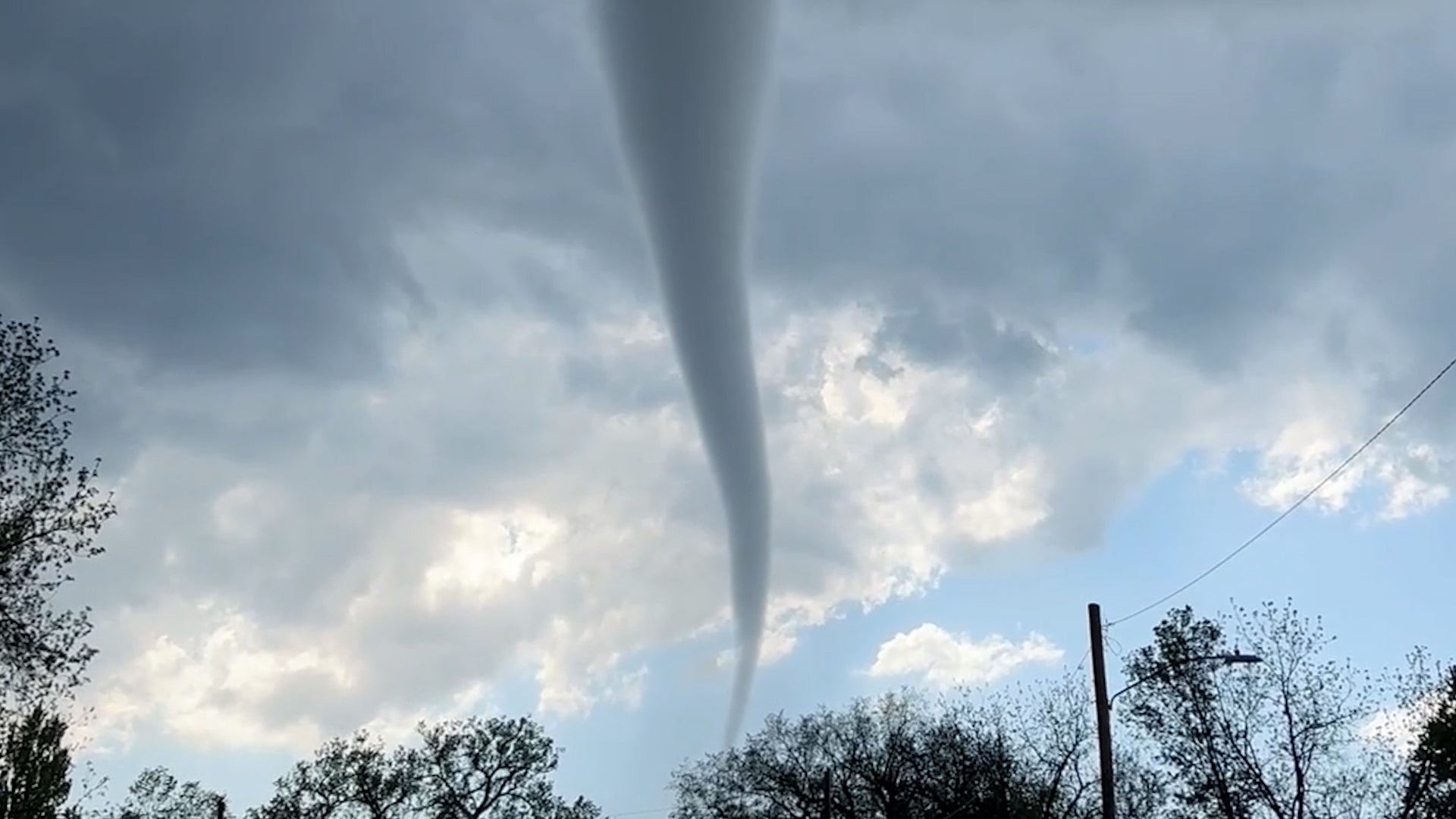
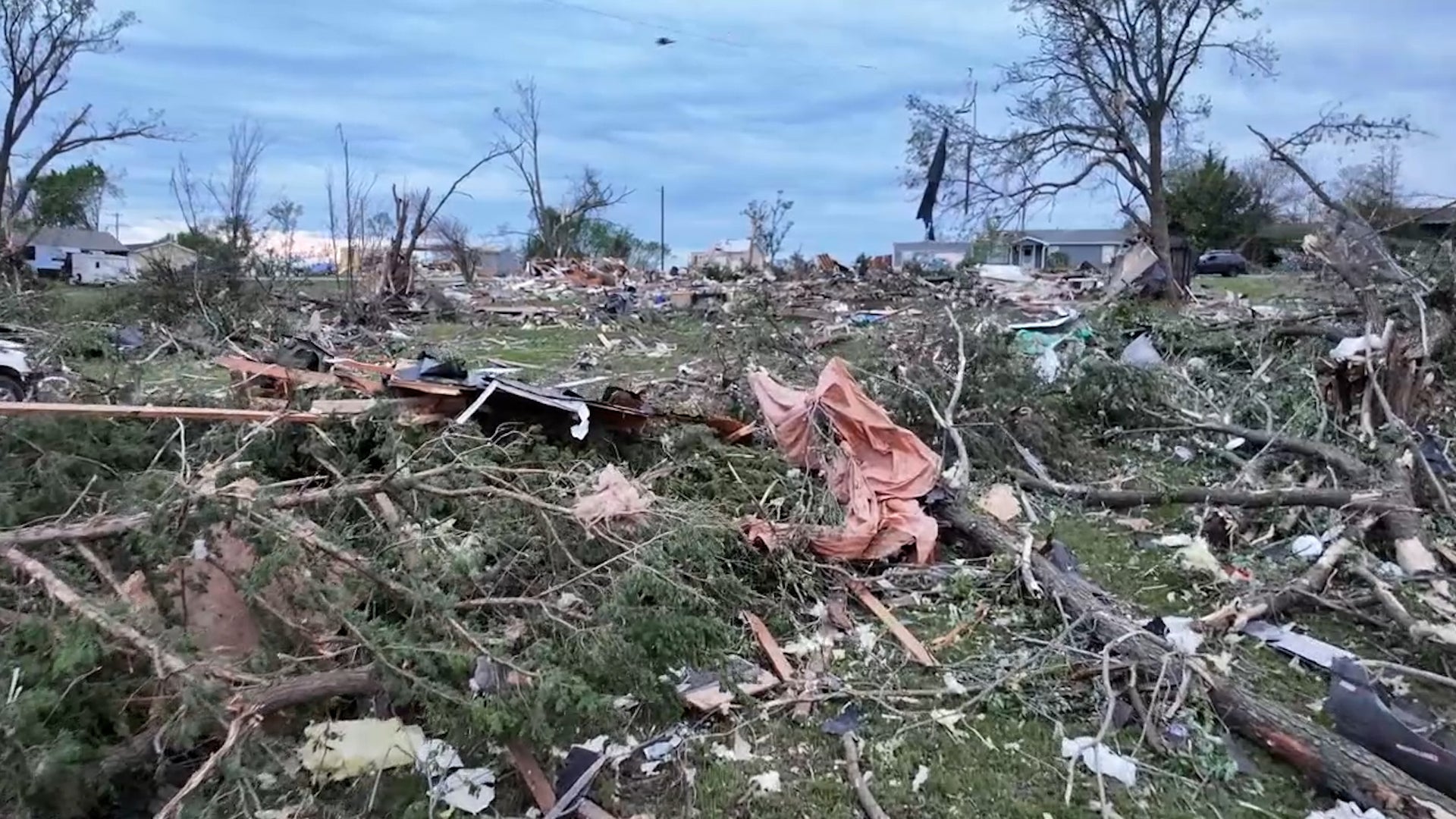
Residents of Parkersburg, Iowa continue to assess damage and clean up from the tornado that killed six people on Sunday. The tornado was rated EF-5, the highest possible rating for a tornado. An EF-3 tornado also hit Hugo, Minnesota on Sunday, killing one person. Only five new tornado reports occurred yesterday, and severe weather is expected to remain relatively low for the next two days. A new storm system is expected to bring an enhanced chance of severe weather to the upper Midwest beginning Thursday. The deaths Sunday push this year's tornado death toll to 110. This makes 2008 the 12th deadliest tornado season since 1950, and the deadliest since 1998, when 130 deaths were recorded. Assuming that the Parkersburg, Iowa tornado was an EF-4 or EF-5, there have been nine violent EF-4 or EF-5 tornadoes this year. This is the most since 1999, when 13 such twisters were recorded. The total (preliminary) number of tornadoes so far this year is 1191. I doubt that we will break the all time record of 1817 tornadoes in a year, set in 2004, but 2008 may vault into second place if we can top 1998's 1424 tornadoes. Could this year's tornadoes be a sign of climate change?


Figure 1. Tornadoes deaths in the U.S. by year since 1950. Year 2008 deaths are as of May 26.

Well, let's be clear that human-caused climate change is occurring, and will significantly affect nearly all aspects of weather and climate in the decades to come. However, many of these changes will be so small or gradual that they will not become detectable until many decades hence, since there is a large natural variability in weather. As I noted in my February blog, Are tornadoes getting stronger and more frequent?, there is new research that predicts that we may see an increase in the severe thunderstorms that spawn tornadoes by the end of the century. However, the computer modeling efforts that predict this rise in severe weather are just beginning, and much more research remains to be done before we can believe these preliminary results.

Will we be able to detect changes in tornado frequency if they occur?
We won't be able to detect changes in tornado frequency due to climate change, unless there is a very large change. We need a technology that can detect all tornadoes, all the time in order to be able to evaluate changes in tornado frequency. Doppler radar can only "see" perhaps 50% of all tornadoes, and many of those it detects never touch down. Thus, we rely on human observers to spot tornadoes, or look for buildings that got in the way of a tornado, using the damage pattern to identify a tornado. If there are no humans around to see a tornado, and if a tornado does not encounter any structures, it will go unrecorded. As the population increases and more buildings are erected, tornado reports will increase. This factor alone can account for the observed increase in total tornadoes since 1950 (Figure 2).

Is there evidence that strong and violent tornadoes are increasing?
Strong tornadoes (EF2 and EF3 on the Enhanced Fujita Scale) and violent tornadoes (EF4 and EF5, or F4 and F5 on the pre-2007 Fujita Scale), which make up less than 25% of all tornadoes, cause a large fraction of the tornado deaths. These storms are less likely to go uncounted, since they tend to cause significant damage along a long track. Thus, the climatology of strong and violent tornadoes may offer a clue as to how climate change may be affecting severe weather. Unfortunately, we cannot measure the wind speeds of a tornado directly, except in very rare cases when researchers happen to be present with sophisticated research equipment. Tornadoes are categorized using the Enhanced Fujita (EF) scale, which is based on damage. So, if a strong or violent tornado happens to sweep through empty fields and never destroy any structures, it will not get a rating. Thus, if the number of violent tornadoes has actually remained constant over the years, we should expect to see some increase in these storms over the decades, since more buildings have been erected in the paths of tornadoes.

However, if we look at the statistics of strong and violent U.S. tornadoes since 1950 (Figure 2), there does not appear to be any increase in the number of these storms. In fact, there appears to be a decrease, although the quality of the data base is probably not good enough to say this with confidence. It appears likely that climate change has not caused an increase in the strongest tornadoes in recent decades. I believe we can blame 2008's nasty tornado season on an unusually far south loop that the jet stream has taken this year over the U.S., thanks to natural variability in the weather.


Figure 2. Total, strong and violent tornadoes in the U.S. by year since 1950. The year 2008 (not pictured) has had 128 strong or violent tornadoes as of May 26, according to Wikipedia.

Possible development in the Western Caribbean or Eastern Pacific late this week
A weak low pressure area (Invest 90E) has developed in the Eastern Pacific off the coast of Guatemala, near 10N 90W. This low has the potential to develop into a tropical depression by the end of the week, according to the UKMET model. Other models, such as the GFS, Canadian, and ECMWF, foresee that this area of disturbed weather will not have time to develop before moving northwards over Central America by the end of the week, bringing heavy rains to the region. Once over land, this low might move over the waters of the Western Caribbean and allow a tropical depression to form, as predicted by the GFS model. The NOGAPS model, in contrast, predicts that a tropical depression will form in the Western Caribbean south of Cuba, with no development in the Eastern Pacific. Given the persistence of these computer models over the past week in developing something in the region, I'd put the odds of a tropical depression forming within 7 days at about 40% in the Eastern Pacific, and at 20% in the Western Caribbean. There is a lot of wind shear predicted to prevail near or over the Western Caribbean late this week and early next week, reducing the odds that any such development could hold together long enough to affect the U.S. Regardless, residents of Guatemala, El Salvador, Honduras, Belize, and southern Mexico can expect heavy rains and possible flash flooding late this week from this system.


Figure 3. Area of disturbed weather over the Eastern Pacific that is forecast by some models to develop into a tropical depression. The NHC Graphical Tropical Weather Outlook is a good tool to track this disturbance.

I'll have an update by Wednesday afternoon.

Jeff Masters
New Hartford (snp4u)
Missing House, if found call Dennis and Carla
New Hartford
New Hartford (snp4u)
car pile up
New Hartford
Supercell near Pratt, Kansas (MikeTheiss)
Nice structure on upercell east of Pratt, Kansas. Photo copyright Mike Theiss.
Supercell near Pratt, Kansas
Categories: Tornado
  Permalink | A A A
Reader Comments
Display: 0, 50, 100, 200 Sort: Newest First - Order Posted
Viewing: 1051 - 1101

Page: 1 | 2 | 3 | 4 | 5 | 6 | 7 | 8 | 9 | 10 | 11 | 12 | 13 | 14 | 15 | 16 | 17 | 18 | 19 | 20 | 21 | 22 | 23 | 24 | 25 | 26 | 27Blog Index

1051. reasonmclucus 09:02 AM GMT on Mei 28, 2008    
There is a study indicating that the cooler temperatures associated with the la Nina portion of the el Nino la Nina Southern Oscillation is associated with larger tornado outbreaks and stronger tornadoes.
Mark C. Bove of the Center for Ocean-Atmospheric Prediction Studies (COAPS) in a paper published in 1999 noted a connection between ENSO and tornadic activity in the U.S. La Ninas were associated with tornado outbreaks and strong tornadoes. The tornado that wiped out Greensburg, Kansas, last May occurred while the current la Nina was developing.

http://www.coaps.fsu.edu/papers/impacts_enso_tornadic_activity/

According to Bove, "The results indicate that El Nio events reduce tornadic activity in the southern plain states, while El Viejo [la Nina] events increase tornadic activity in the Ohio River Valley and Deep South. Results further show that El Nio inhibits the chances of multiple tornado outbreaks, while La Nia facilitates large tornadic outbreaks and produces more devastating tornadoes."

A 1996 report for the Defense Technical Information Center noted increased freezing rain in the western U.S. during la Nina years as compared to el Nino years.

Member Since: Mei 27, 2008 Posts: 0 Comments: 47
1052. BahaHurican 09:18 AM GMT on Mei 28, 2008    
I'd seen some references to the tornado incidence before. Seems like there is quite a bit of support for this. Not surprisingly, there is also a slightly greater incidence of TCs in the ATL basin during La Nina years as well.
Member Since: Oktober 25, 2005 Posts: 19 Comments: 17631
1053. extreme236 10:09 AM GMT on Mei 28, 2008    
NHC has a 1006mb SFC low in the Caribbean.
Member Since: Agustus 2, 2007 Posts: 19 Comments: 19234
1054. extreme236 10:11 AM GMT on Mei 28, 2008    
Caribbean system seems more organized and 90E is more organized. Once the Caribbean system moves NW perhaps both could develop?
Member Since: Agustus 2, 2007 Posts: 19 Comments: 19234
1055. extreme236 10:19 AM GMT on Mei 28, 2008    
T1.0/1.0 90E -- East Pacific Ocean
Member Since: Agustus 2, 2007 Posts: 19 Comments: 19234
1056. extreme236 10:26 AM GMT on Mei 28, 2008    
The SFC maps from the NHC suggest a possible tropical cyclone from 90E on the 24 and 48 hour maps then on the 72 hour map I looked at, it showed the Caribbean low stationary in the Gulf of Honduras. It looks like the tropical wave that will soon interact with the Caribbean low will kick it NW.
Member Since: Agustus 2, 2007 Posts: 19 Comments: 19234
1058. IKE 10:33 AM GMT on Mei 28, 2008    
Just about all of the models I've looked at take this entire mess WNW to NW for the next several days...winding up around the Yucatan peninsula to the BOC.
Member Since: Juni 9, 2005 Posts: 23 Comments: 37044
1059. BahaHurican 10:39 AM GMT on Mei 28, 2008    
1057. leftovers 6:31 AM EDT on May 28, 2008
I have not seen too many EPac disturbances develop this close to Latin America. Most develop south of Mexico so?


It's not that unusual at this time of year. Eward movement into Costa Rica is less usual, though.
Member Since: Oktober 25, 2005 Posts: 19 Comments: 17631
1060. IKE 10:40 AM GMT on Mei 28, 2008    
According to the latest GFS(6Z), the ridge will break down in about a week allowing this system to finally head north or NNE toward south FL.

Link
Member Since: Juni 9, 2005 Posts: 23 Comments: 37044
1061. Thundercloud01221991 10:42 AM GMT on Mei 28, 2008    
this thing looks like a TS already
Member Since: Agustus 1, 2006 Posts: 28 Comments: 3669
1062. TerraNova 10:47 AM GMT on Mei 28, 2008    
Morning everyone.

Steering currents would take 90E towards Costa Rica or Nicaragua; I don't know how this would go westward unless I'm missing something. Right?

I wouldn't put much faith on the models, especially regarding the recent runs. The computer guidance is having problems deciding which low will dominate over the other and this is creating discrepancies during the longer range forecasts. GFS suppresses the Caribbean disturbance despite it showing favorable conditions as it moves to the northwest.
Member Since: Juli 30, 2007 Posts: 76 Comments: 4058
1063. extreme236 10:47 AM GMT on Mei 28, 2008    
New EPAC Discussion:

...SPECIAL FEATURES...

A BROAD AREA OF SURFACE LOW PRESSURE DOMINATES THE SW CARIBBEAN
AND THE E PAC ALONG THE COAST OF CENTRAL AMERICA. DURING THE
LAST SEVERAL HOURS THE OVERALL PATTERN OF THIS AREA HAS BEEN
SUGGESTING THAT A SURFACE LOW HAS BECOME MORE IDENTIFIABLE IN
THE VICINITY OF 09N88W WITH SCATTERED MODERATE TO STRONG
CONVECTION OCCURRING WITHIN 300 NM SE AND 210 NM SW QUADRANTS.
SCATTERED STRONG CONVECTION IS WITHIN 90 NM N AND NE
QUADRANTS...AND ALSO WITHIN 45 NM EITHER SIDE OF A LINE FROM
07N80W TO 08N84W.

NWP MODELS CONTINUE TO SUGGEST THAT THIS LOW PRESSURE WILL BE
PRESENT IN THIS AREA FOR THE NEXT 2 TO POSSIBLY 3 DAYS AS IT
DRIFTS ENE. THE LOW HAS ACQUIRED THE POTENTIAL TO DEVELOP INTO
A TROPICAL CYCLONE OVER THIS PERIOD AS THE UPPER LEVEL PATTERN
HAS BECOME MORE FAVORABLE...AND IN ADDITION THE APPROACHING
TROPICAL WAVE MENTIONED BELOW MAY ADD THE NEEDED LOW LEVEL
VORTICITY TO FURTHER HELP SPIN UP THE LOW DURING THE NEXT 48
HOURS. THE MODELS...FOR THE MOST PART...TRY TO BRING THE LOW
OR WHAT IS LEFT OF IT IN A GENERAL NLY TRACK ACROSS OR NEAR THE
REMAINDER OF CENTRAL AMERICA LATE FRI AND THROUGH THE UPCOMING
WEEKEND.

OF NOTE...THE GRADIENT S OF THE E PAC LOW PRESSURE IS ALREADY
SUPPORTING SW-W WINDS IN THE RANGE OF 20 TO 25 KT WITH SEAS
8-11 FT. QUIKSCAT DATA FROM YESTERDAY EVENING SHOWED WINDS IN
THE 20-25 KT RANGE WITH DIRECTION FROM SW TO W WITHIN THE BROAD
LOW PRES AREA BETWEEN 81W-93W.

THESE CONDITIONS ARE EXPECTED TO PERSIST S OF THE LOW THROUGH 48
HOURS WITH THE FOOTNOTE THAT THEY MAY HAVE TO BE
ADJUSTED UPWARD IF LOW CONTINUES TO GET BETTER ORGANIZED. THE
MAIN THING TO CONSIDER FOR TIME BEING IS THE HEAVY RAIN POTENTIAL
EXPECTED OVER MUCH OF CENTRAL AMERICA FROM NICARAGUA TO PANAMA
AT LEAST DURING THE NEXT 48 HOURS.
Member Since: Agustus 2, 2007 Posts: 19 Comments: 19234
1064. Stormchaser2007 10:51 AM GMT on Mei 28, 2008    
WOW!!
Member Since: Juni 9, 2007 Posts: 4 Comments: 15248
1065. IKE 10:52 AM GMT on Mei 28, 2008    
1061. Thundercloud01221991 5:42 AM CDT on May 28, 2008
this thing looks like a TS already


Yeah it does.
Member Since: Juni 9, 2005 Posts: 23 Comments: 37044
1067. Stormchaser2007 10:55 AM GMT on Mei 28, 2008    
This thing has a good chance of developing....
Member Since: Juni 9, 2007 Posts: 4 Comments: 15248
1068. extreme236 10:55 AM GMT on Mei 28, 2008    
The NHC believes the system will drift East/NE over time...be back later.
Member Since: Agustus 2, 2007 Posts: 19 Comments: 19234
1069. all4hurricanes 10:56 AM GMT on Mei 28, 2008    
IKE i agree that it looks like a TS but it looks like it's spinning the wrong way! I think conditions are favorable immediately offshore.
Member Since: Maret 29, 2008 Posts: 0 Comments: 2192
1071. IKE 10:58 AM GMT on Mei 28, 2008    
1069. all4hurricanes 5:56 AM CDT on May 28, 2008
IKE i agree that it looks like a TS but it looks like it's spinning the wrong way! I think conditions are favorable immediately offshore.


What do you mean by..."the wrong way?" You mean it's movement TOWARD the coast?
Member Since: Juni 9, 2005 Posts: 23 Comments: 37044
1072. all4hurricanes 10:58 AM GMT on Mei 28, 2008    
IKE i agree that it looks like a TS but it looks like it's spinning the wrong way! I think conditions are favorable immediately offshore.
Member Since: Maret 29, 2008 Posts: 0 Comments: 2192
1073. extreme236 10:58 AM GMT on Mei 28, 2008    
JP, before I go, the NHC does seem to have taken off the low from their sfc maps in the Caribbean however they still forecast one to develop in 24 hours.
Member Since: Agustus 2, 2007 Posts: 19 Comments: 19234
1074. IKE 10:59 AM GMT on Mei 28, 2008    
I only see one low on satellite...in the eastern PAC...I see no spin in the Caribbean.
Member Since: Juni 9, 2005 Posts: 23 Comments: 37044
1076. all4hurricanes 11:00 AM GMT on Mei 28, 2008    
I'm referring to the wave off on Africa, the small band attached to it and the direction it's facing makes it look like it's spinning clockwise which is typical in the southern hemisphere.
Member Since: Maret 29, 2008 Posts: 0 Comments: 2192
1077. IKE 11:01 AM GMT on Mei 28, 2008    
1076...OK
Member Since: Juni 9, 2005 Posts: 23 Comments: 37044
1078. Ivansrvivr 11:05 AM GMT on Mei 28, 2008    
System in the E-Pac looks like it has started an eastward drift. if that continues, it may tend to relocate to the other side of Central America where topography supports cyclonic turning of surface winds. The overall tropical moisture has moved northward throughout the Caribbean rapidly. If the E-Pac system emerges somehow into the E-Carribean or dissipates, the low in the Caribbean would have a decent chance to develop or merge with the W-Pac low. Any development in that area would be a huge rainmaker for Florida down the road most likely.
1079. Cavin Rawlins 11:07 AM GMT on Mei 28, 2008    
Good Morning,

90E is near depression status and becuz of its close proximity to the SW Caribbean, low or no low, it cannot breath effectively becuz of 90E. Also, the GFS and CMC is showing development of the coast of africa this weekend. I am updating my blog.
Member Since: Juli 24, 2005 Posts: 407 Comments: 19076
1080. Stormchaser2007 11:08 AM GMT on Mei 28, 2008    
But the Caribbean low would have to survive this first....
Member Since: Juni 9, 2007 Posts: 4 Comments: 15248
1081. IKE 11:07 AM GMT on Mei 28, 2008    
The extended, 6-10 day and 8-14 day outlook, is for above average rain for most of Florida.
Member Since: Juni 9, 2005 Posts: 23 Comments: 37044
1083. Stormchaser2007 11:11 AM GMT on Mei 28, 2008    
Well if theres no low in the Caribbean then theres something thats gotta be spinning down there.
Member Since: Juni 9, 2007 Posts: 4 Comments: 15248
1084. Ivansrvivr 11:11 AM GMT on Mei 28, 2008    
456 development in that area would recurve very early but would be strange no matter what it's track is. That "Blob" over africa is probably just thunderstorms. Often when they look very strong over Africa, they fall apart once they hit the ocean. It looks like the CV season will be super busy this year.
1086. Stormchaser2007 11:15 AM GMT on Mei 28, 2008    
chaser i still think there is an elongated trough, if anything is spinning in the SW Caribbean, it isnt at the surface

I know that theres no surface low, I was implying that the Caribbean spin is stronger than 90E...
Member Since: Juni 9, 2007 Posts: 4 Comments: 15248
1087. Ivansrvivr 11:15 AM GMT on Mei 28, 2008    
JP, It is possible that the low level center and mid level support are moving two different directions. Looking at it in IR loop, 90E looks like it is moving eastward in the last few frames.
1088. stoormfury 11:15 AM GMT on Mei 28, 2008    
a very pwerful wave to exist the coast of africa


Link
Member Since: Agustus 22, 2006 Posts: 0 Comments: 2303
1090. Stormchaser2007 11:17 AM GMT on Mei 28, 2008    
Fury just posted that about 20 posts ago....
Member Since: Juni 9, 2007 Posts: 4 Comments: 15248
1091. Thundercloud01221991 11:21 AM GMT on Mei 28, 2008    
ok this will likely form into a depression sometime today you can see banding, a CDO and strong convection. Just waiting on vis to prove it is closed
Member Since: Agustus 1, 2006 Posts: 28 Comments: 3669
1092. stoormfury 11:22 AM GMT on Mei 28, 2008    
ok stormchaser
Member Since: Agustus 22, 2006 Posts: 0 Comments: 2303
1093. MasterForecaster 11:40 AM GMT on Mei 28, 2008    
This thing is starting to get its act together. Tonight should be interesting.

Didn't the GFS and NOGAPS predict (4 days ago) this to become a depression today?
1094. Cavin Rawlins 11:44 AM GMT on Mei 28, 2008    
The NHC has designated the area in the Eastern Pacific as Tropical Invest 90E. An invest is an area of disturbed weather persisting for more than 24 hrs, has the potential to develop and/or affect land. This morning's infrared satellite animation show an organizing system with clusters of thunderstorms developing near the center of circulation. Environmental conditions, such as low vertical shear, poleward outflow, and favorable sea surface temperatures, indicate continue organization of 90E and it is possible to have a depression by Thursday. The steering flow....More
Member Since: Juli 24, 2005 Posts: 407 Comments: 19076
1096. fmbill 11:48 AM GMT on Mei 28, 2008    
Anyone know anything about this model? Is it usually "out to lunch"?

GEM GLB

Link
Member Since: Mei 27, 2008 Posts: 0 Comments: 365
1097. cajunkid 11:50 AM GMT on Mei 28, 2008    
Member Since: Juli 10, 2005 Posts: 3 Comments: 1239
1099. IKE 11:53 AM GMT on Mei 28, 2008    
1096. fmbill 6:48 AM CDT on May 28, 2008
Anyone know anything about this model? Is it usually "out to lunch"?

GEM GLB

Link


CMC model or Canadian model. It's usually out-to-lunch.
Member Since: Juni 9, 2005 Posts: 23 Comments: 37044
1100. MasterForecaster 11:53 AM GMT on Mei 28, 2008    
fmbill that model is from MONDAY. lol
1101. TheCaneWhisperer 11:53 AM GMT on Mei 28, 2008    
Morning All.

I see our little area is becoming more organized as expected by Wednesday. It will be interesting to watch from here on out. Not that the past week hasn't been enjoyable but, rather stale, lol.

Viewing: 1051 - 1101

Page: 1 | 2 | 3 | 4 | 5 | 6 | 7 | 8 | 9 | 10 | 11 | 12 | 13 | 14 | 15 | 16 | 17 | 18 | 19 | 20 | 21 | 22 | 23 | 24 | 25 | 26 | 27Blog Index

New Comment
Community Standards Policy Comments will take a few seconds to appear.
Post Your Comments
Please sign in to post comments.
Not only will you be able to leave comments on this blog, but you'll also have the ability to upload and share your photos in our Wunder Photos section.
About JeffMasters
Jeff co-founded the Weather Underground in 1995 while working on his Ph.D. He flew with the NOAA Hurricane Hunters from 1986-1990.

Local Weather
Overcast
79 °F
Berawan
Community Activity